Car Battery Draining Fast: Reasons and Solutions in 2026
Car Battery Draining Fast Solution in 2026

Introduction
If your car battery draining fast is a problem you keep facing, you’re not alone — millions of drivers deal with this frustrating issue every year. A battery that keeps dying, whether overnight or while parked, can leave you stranded at the worst possible time. The good news? Most causes of fast battery drain are completely preventable once you know what to look for. In this guide, we’ll walk you through every major reason your battery loses charge quickly and give you clear, actionable solutions to fix each one. Whether your car is new or old, parked or running, this article covers it all.
What Can Drain a Car Battery When the Car Is Off?
Many drivers assume the battery only drains while driving, but that’s far from the truth. Several systems continue drawing power even after you turn off the ignition.
The most common culprits include interior lights left on, a faulty door switch keeping dome lights active, and electronic modules that fail to enter sleep mode. Modern vehicles have dozens of computers that stay partially active — and if even one malfunctions, your car battery keeps draining overnight without warning.

Parasitic Draw — The Silent Killer
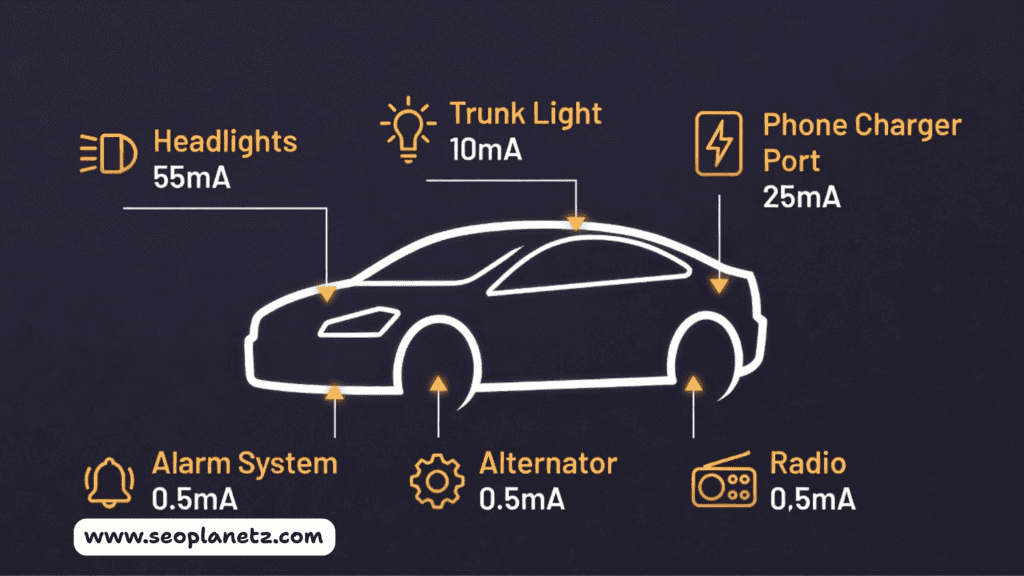
Parasitic draw is when a component pulls current from the battery when it shouldn’t. A normal vehicle draws between 20–50 milliamps in sleep mode. Anything above 100mA is considered abnormal and will drain a fully charged battery within days.
Also Read: How Long Do Car Batteries Last? 7 Critical Facts You Need to Know
Common sources of parasitic draw:
- Aftermarket alarms or audio systems wired incorrectly
- Faulty relay switches stuck in the “on” position
- Glove box or trunk lights that stay on
- Short circuits in the wiring harness
According to AAA’s automotive research, battery-related breakdowns are the #1 roadside assistance request, with parasitic drain being a leading cause.
Top Reasons Your Car Battery Is Draining Fast
1. Old or Weak Battery (Car Battery Draining Fast)
Most car batteries last 3 to 5 years. After that, the internal cells degrade and can no longer hold a full charge. If your car battery keeps dying even after replacing it, and the replacement is low quality, the same problem will repeat.
Always buy batteries with a CCA (Cold Cranking Amps) rating matching or exceeding your vehicle manufacturer’s specification. Consumer Reports’ battery buying guide recommends brands with at least a 3-year free replacement warranty.
2. Failing Alternator
The alternator charges your battery while the engine runs. A failing alternator means the battery never gets properly recharged, causing it to drain faster and faster over time.
Signs of a bad alternator:
- Dimming headlights while idling
- Battery warning light on dashboard
- Grinding or whining noises from the engine bay
If your car keeps dying and the battery and alternator are good, the issue may be a bad voltage regulator — part of the alternator assembly.
3. Extreme Temperature Effects cause Car Battery Draining Fast
Heat accelerates battery fluid evaporation. Cold temperatures increase the power required to start the engine. Both extremes put extra strain on an aging battery.
According to Battery Council International, batteries lose roughly 35% of their power at 32°F and up to 60% at 0°F.
4. Short Trips and Frequent Stops
When you drive only short distances, the alternator doesn’t have enough time to fully recharge the battery after startup. Over time, this leads to a car battery draining fast while driving short routes repeatedly.
A battery that’s regularly undercharged sulfates internally — meaning lead sulfate crystals build up on the plates and permanently reduce capacity.
Also Read: Why Is My Car Smoking? 7 Common Causes and How to Fix Them
5. Corroded or Loose Battery Connections
Corrosion on battery terminals creates resistance in the electrical circuit. This means the alternator has to work harder, and less charge actually reaches the battery. Loose cable connections cause the same issue — and can cause dangerous voltage spikes.
Clean white or blue corrosion with a baking soda and water solution, then apply terminal protector spray. The National Highway Traffic Safety Administration recommends inspecting battery connections at every oil change.
6. Faulty Charging System Components
Beyond the alternator, the voltage regulator, serpentine belt, and battery cables all play roles in keeping the battery charged. A worn belt will slip and reduce alternator output. Undersized or damaged cables create voltage drop.
7. Leaving Electronics Plugged In
USB chargers, dash cams, and GPS units left plugged in after the engine shuts off draw constant power. Even a single USB charger pulling 500mA will drain a typical 60Ah battery in about 5 days — explaining why your car battery is dead after sitting 5 days.
| Drain Source | Typical Draw | Time to Drain 60Ah Battery |
|---|---|---|
| Interior light left on | 10W (~830mA) | ~3 days |
| USB charger plugged in | ~500mA | ~5 days |
| Faulty alarm module | 200–400mA | 6–12 days |
| Normal parasitic draw | 20–50mA | 50–125 days |
| Failing alternator (0 charge) | N/A | 1–3 drives |
Table 1: Estimated battery drain times by common source (based on a fully charged 60Ah battery)
Car Battery Draining Fast While Parked — Special Causes
A car battery draining fast while parked is especially common in newer vehicles packed with technology. Keyless entry modules, telematics systems, and over-the-air update systems all wake up periodically and draw power.
Also Read: 2026 Chevrolet malibu Revealed: Specs, Price & Features
Some known causes specific to parked battery drain:
- Keyless entry proximity sensors constantly scanning for your key fob
- GPS tracking modules sending location pings
- OBD-II devices (insurance dongles) left plugged in
- Infotainment systems that don’t power down properly
If you have a new car battery that keeps dying while parked, run a parasitic draw test before assuming the battery is defective.

How to Stop Car Battery From Draining Overnight
Here are the most effective solutions to stop overnight drain:
Immediate fixes:
- Disconnect the negative battery terminal if storing the car for over a week
- Use a battery maintainer/trickle charger (not a fast charger) when parked long-term
- Remove any aftermarket devices plugged into the OBD port or 12V socket
Diagnostic steps:
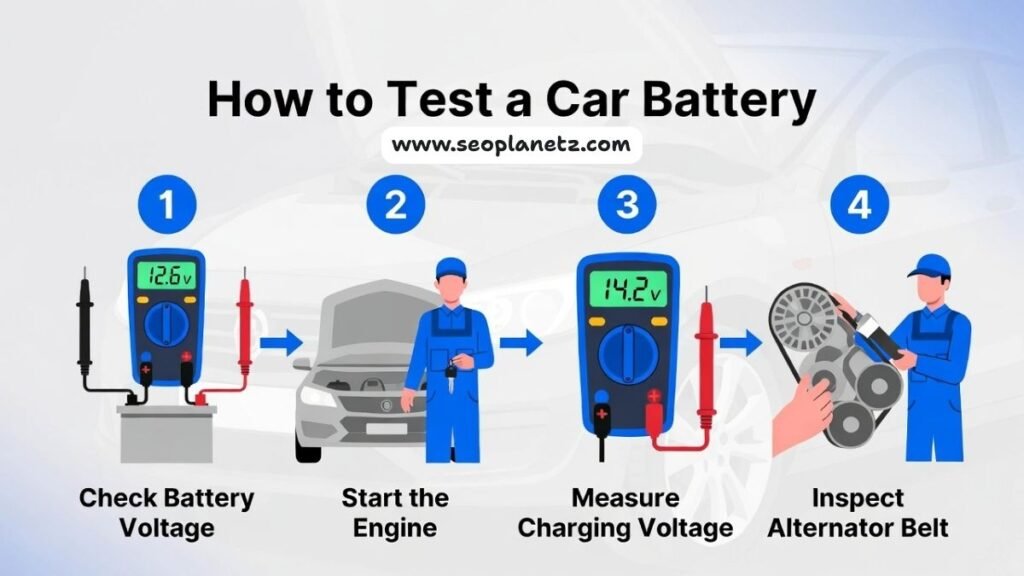
- Perform a parasitic draw test with a multimeter set to DC amps
- Pull fuses one at a time while monitoring the meter to isolate the circuit
- Check if the draw drops when specific doors are opened (indicating a door switch issue)
Long-term solutions:
- Install a battery isolator switch if you store the vehicle seasonally
- Upgrade to an AGM (Absorbent Glass Mat) battery, which handles deep cycling better than standard flooded batteries
- Have the charging system load-tested annually at any auto parts store
Engineering Explained on YouTube provides excellent visual walkthroughs of parasitic draw testing for DIYers.
| Battery Type | Deep Cycle Tolerance | Vibration Resistance | Price Range | Best For |
|---|---|---|---|---|
| Flooded Lead-Acid | Low | Low | $80–$150 | Daily commuters |
| AGM (Absorbed Glass Mat) | High | High | $150–$250 | Stop-start vehicles |
| EFB (Enhanced Flooded) | Medium | Medium | $100–$180 | Light stop-start use |
| Lithium (LiFePO4) | Very High | Very High | $300–$600 | Performance/racing |
Table 2: Car battery types comparison by tolerance and application (2026)
Does Idling Your Car Charge the Battery?
Yes — but barely. At idle, most alternators produce enough output to maintain the battery but not significantly recharge a depleted one. You need engine RPMs above 1,000–1,500 RPM for meaningful charging.
If your battery is low, a 30-minute highway drive will recharge it far more effectively than 2 hours of idling. Idling for battery charging is also fuel-inefficient and hard on the engine. Use a proper battery charger instead.
Also Read: Do Electric Cars Have Transmissions in 2026? The Complete Guide
How to Tell If an Alternator Is Draining the Battery
A faulty alternator can actually drain the battery even while the car is running — a condition called alternator diode failure. Normally, diodes inside the alternator prevent current from flowing backward into it. When a diode fails, it creates a drain path.
To test:
- Fully charge the battery
- Start the car and disconnect the negative battery terminal briefly (1–2 seconds max on modern cars — longer can damage electronics)
- If the car stalls immediately, the alternator is not charging
Better method: Use a multimeter set to DC voltage. With engine running, measure voltage across battery terminals. You should see 13.5V–14.7V. Below 13V means the alternator is undercharging.
According to MIT’s open courseware on automotive systems, a healthy charging system should maintain stable voltage within a 0.5V range across all RPM levels.
Key Takeaways
- Car battery draining fast is most often caused by parasitic draw, a failing alternator, or an old battery nearing end of life
- Any parasitic draw above 100mA will drain your battery within days
- Short trips prevent the battery from fully recharging — highway driving is more battery-friendly
- AGM batteries handle repeated deep discharges far better than standard flooded batteries
- Always run a multimeter test before replacing a battery — the battery may not be the root cause
- Disconnecting electronics and using a battery maintainer are the easiest overnight drain solutions
- A car battery typically lasts 3–5 years; replace proactively, not reactively
Frequently Asked Questions
Q: What drains a car battery when the car is off?
A: The most common causes are parasitic draw from electronics (alarm systems, infotainment modules, USB devices), interior lights left on, and malfunctioning door switches. Even normal standby systems draw small amounts — but faulty ones can drain a battery in days.
Q: Why is my car battery draining so fast all of a sudden?
A: A sudden increase in drain usually points to a newly faulty component — a relay stuck open, a module that stopped sleeping properly, or a newly installed device wired incorrectly. It can also signal the battery has reached end of life and can no longer hold charge.
Q: How do I find out what is draining my car battery?
A: Connect a multimeter in series with the negative battery terminal set to DC amps. A reading above 50mA indicates abnormal drain. Then pull fuses one at a time — when the reading drops, you’ve found the circuit responsible.
Q: How do I stop my car battery from draining so fast?
A: Start by eliminating obvious culprits: unplug OBD devices, check for lights staying on, and inspect aftermarket accessories. Use a battery maintainer for long-term parking. If drain continues, perform a parasitic draw test to isolate the faulty circuit.
Q: How to tell if an alternator is draining the battery?
A: Test voltage at the battery with the engine running. A healthy alternator reads 13.5V–14.7V. Below 13V means inadequate charging. Alternator diode failure can also create a reverse drain path — a dedicated diode test at an auto shop can confirm this.
Q: Does idling your car charge the battery?
A: Idling produces minimal charging — not enough to recover a significantly discharged battery. Highway driving at higher RPMs charges far more efficiently. For a dead battery, always use a proper battery charger, not prolonged idling.
Q: Why does my new car battery keep dying while parked?
A: A new battery dying quickly almost always means the battery isn’t the problem — it’s a parasitic drain issue or a charging system fault. A new battery should hold charge for 2–4 weeks with no use. If it dies faster, run a parasitic draw test immediately.
Also Read: How to Jump a Car Safely and Correctly in 2026
Conclusion
Dealing with a car battery draining fast is one of the most common — and most solvable — car problems you’ll face. The key is identifying whether you’re dealing with a battery issue, a charging system issue, or a parasitic drain before throwing money at parts. A $10 multimeter and 20 minutes of testing can save you hundreds in unnecessary replacements.
Whether your car battery keeps draining overnight, dies after sitting a few days, or loses charge while driving, the causes are well understood and the fixes are straightforward. Start with the basics: check battery age, inspect connections, test alternator output, and run a parasitic draw test. In most cases, one of those steps will reveal the problem immediately.
A proactive approach — replacing batteries every 4–5 years, keeping connections clean, and avoiding extended short-trip driving — means car battery draining fast will rarely be your problem again. Take care of your battery, and it will take care of you.